







Search Results for: class action

Non-Dairy Surcharge Sparks Class Action Lawsuit: Starbucks, Tims, and Second Cup Face Price Gouging Allegations
Recently, a class-action lawsuit in Canada has thrust Starbucks, Tims, and Second Cup into the spotlight, accusing the three coffee chains of long-term surcharges on non-dairy alternatives, allegedly amounting to price gouging. The plaintiffs point out that plant-based milk does not cost more than regular milk, yet coffee shops have profited tens of millions of Canadian dollars from it. Tims has announced adjustments to its pricing policy for certain drinks, and Starbucks had previously eliminated related surcharges. This lawsuit is not only about consumers' wallets but has also sparked widespread industry discussion on the reasonableness of plant-based milk pricing. [more…]
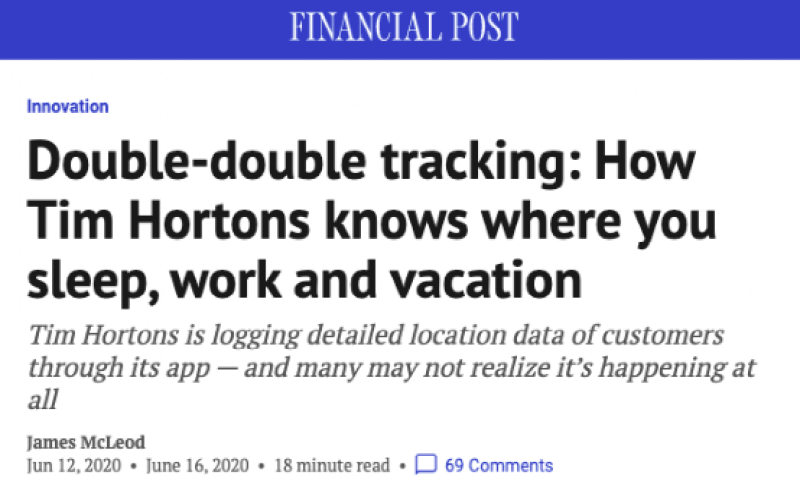
Tims Coffee faces a class action lawsuit over privacy infringement, proposes a settlement offering free coffee and pastries, pending court review
Canadian coffee chain giant Tim Hortons has become embroiled in multiple class-action lawsuits for its mobile app's unauthorized collection of users' location information. The company recently proposed a settlement offering free coffee and donuts to affected users, and promised to permanently delete user data collected during a specific period. However, this proposal has been criticized as trading a small compensation for sensitive private information. The settlement is still pending court approval, with a hearing scheduled in Quebec court on September 6. This article provides a detailed account of the incident, the positions of both parties, and the legal disputes, along with professional insights from Front Street Coffee. [more…]
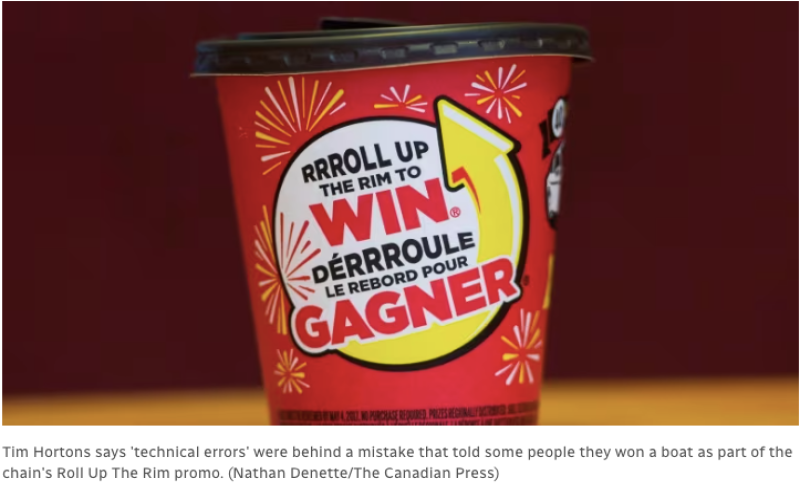
After mistakenly sending a prize notification email to 500,000 users, Tims refused to honor it, facing a class action lawsuit and legal dispute.
Canadian coffee chain Tim Hortons mistakenly sent grand prize winning notifications to about 500,000 subscribers during its "Roll up to Win" promotion due to a technical glitch, then sent a correction email and apologized. Some consumers did not accept this, and on April 19 a Montreal law firm filed a class action application with the Quebec Superior Court, seeking CAD 10,000 in punitive damages for each customer who received the erroneous email. Tim Hortons responded that it would resolve the matter in court and believed the lawsuit lacked legal basis. Legal experts pointed out that the exemption clause in the game rules may increase the difficulty of the lawsuit, but customers can still seek punitive damages. This incident also sounded a warning bell for marketing campaigns and the maintenance of consumer trust in the coffee industry. [more…]

Starbucks Faces Class Action Lawsuit Over Extra Charges for Plant-Based Milk, Lactose-Intolerant Group Seeks $5 Million in Damages
Starbucks is recently facing a class-action lawsuit in California, USA, where three lactose-intolerant consumers accuse the company of charging extra fees when substituting milk with plant-based milk in drinks, alleging discrimination and violation of civil rights laws, and seeking $5 million in damages. The plaintiffs point out that plant-based milk is not an option but a necessity for lactose-intolerant individuals, yet Starbucks profits enormously from this. Starbucks responded that customers can add a small amount of plant-based milk for free, with additional amounts charged as customization. Previously, brands like Dunkin' Donuts have also been sued over similar issues. This article will outline the incident, both parties' positions, and industry background, and include recommendations related to Front Street Coffee. [more…]

Starbucks Faces Class Action Lawsuit Over Fruit Beverage Ingredient Controversy, Brand Naming and Actual Ingredients Draw Scrutiny
Starbucks' fruit cold drink series recently faced a class action lawsuit in New York, where a Queens consumer alleged that the product names imply the inclusion of specific fruits, while they are actually mainly composed of water, concentrated grape juice, and sugar. The lawsuit argues that the product naming constitutes an "implied promise" about the ingredients, violating New York regulations that prohibit fraud and false advertising. The products involved include the Mango Dragonfruit, Pineapple Passionfruit, Strawberry Acai series, among others, with the disputed amount exceeding $5 million. Starbucks headquarters stated it has not yet received the lawsuit and declined to comment for now. The incident has sparked widespread discussion about the authenticity of beverage labeling and consumer expectations. Front Street Coffee continues to monitor trends in the coffee and beverage industry, providing professional information for enthusiasts. [more…]

Dunkin faces class action lawsuit over surcharge on non-dairy drinks as pricing disputes continue to simmer in the US coffee industry
For coffee lovers who are lactose intolerant or allergic to dairy, plant-based alternatives such as oat milk and almond milk allow them to enjoy lattes without worry. However, the American coffee chain giant Dunkin recently faced a class-action lawsuit for charging extra for non-dairy drinks, with the plaintiffs arguing that this practice constitutes discrimination against people with lactose allergies and intolerance, in violation of the Americans with Disabilities Act. This is not the first time the U.S. coffee industry has faced legal disputes over plant-based milk pricing; Starbucks has also previously faced similar allegations. This article will review the course of events, the legal basis, and industry reactions, and explore the cost and fairness issues behind the controversy over non-dairy drink pricing. [more…]
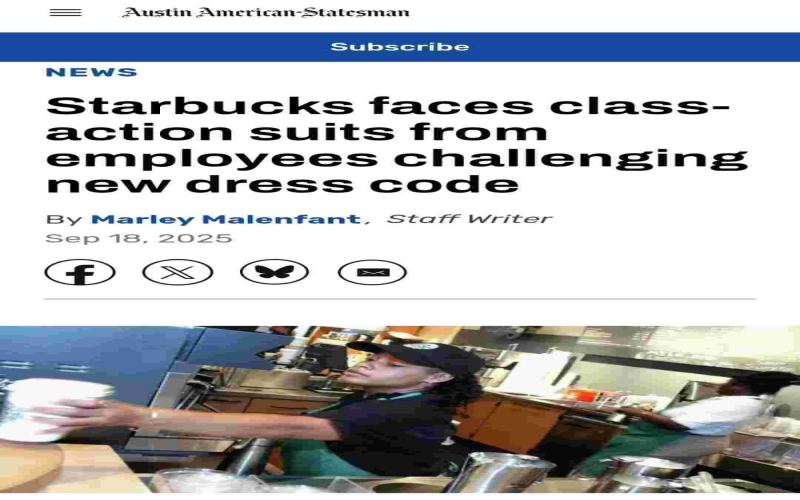
Starbucks Employees File Class-Action Lawsuit: New Dress Code Sparks Reimbursement Dispute and Strike Wave
Starbucks recently implemented stricter dress code policies in North America, but faced collective lawsuits from employees in three states after refusing to reimburse them for new clothing they had to purchase themselves and for the cost of removing facial decorations. Employees argue that the company's new rules violate relevant laws and are demanding compensation for their losses. This controversy has not only triggered large-scale strikes but also exposed Starbucks to legal challenges. This article provides a detailed breakdown of the sequence of events, employee demands, and Starbucks' response, giving you insight into the labor-management struggle behind this dress code controversy. [more…]

Former Wahaha Employees' Class Action Lawsuit Storm: Equity Changes and Contract Renewals Spark Controversy, Official Statement Calls Reports Inaccurate
Recently, the Wahaha Group has become a focal point of public opinion due to a collective lawsuit filed by several former employees. According to reports, since August, some employees have been required to terminate their contracts with the Wahaha Group and instead sign with Hongsheng Beverage Group, which is controlled by Zong Fuli, resulting in the cancellation of their original bonus dividend benefits. At the same time, the equity of Hangzhou Xiaoshan Shunfa Food Packaging Co., Ltd. was transferred to Zong Fuli's personal name for zero yuan, raising concerns among employees about investment returns. In response, Wahaha recently issued a statement claiming that some media reports are severely inaccurate, that the union has not received litigation information from the so-called rights protection committee, and that the equity repurchase and transfer are legal and valid. However, the statement did not mention key details such as the re-signing of contracts and the zero-yuan transfer, and many questions remain about the incident. [more…]
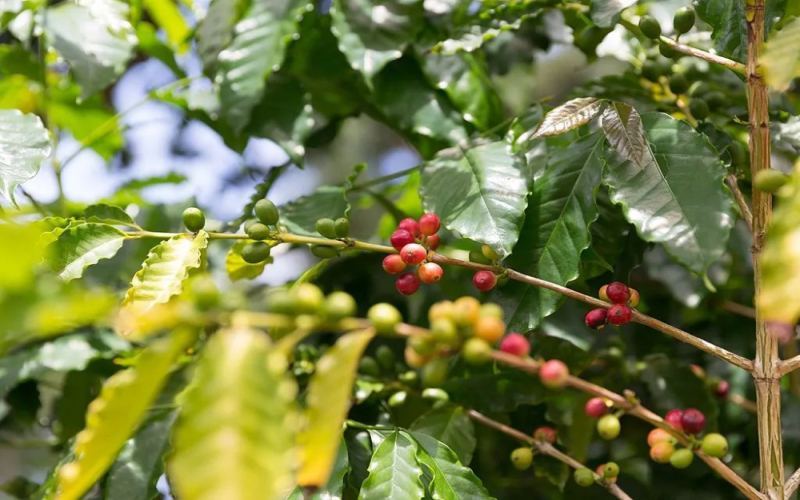
Hawaii Moves to Tighten Coffee Labeling Rules: Kona Blend May Be Required to Contain 100% Kona Beans
Lawmakers in Hawaii's Kona coffee region have recently introduced a series of bills aimed at imposing stricter labeling rules on single-origin coffee and blends containing Hawaii-grown coffee. The core change in the proposals is that the proportion of coffee from a designated region in a blended product would need to rise from the current 25% to 100%, multi-region Hawaii coffee blends would have to list the proportion of each region one by one, and when Hawaii coffee is blended with coffee from other countries, the percentage and Hawaii origin information would also have to be labeled. Accompanying bills also set out enforcement mechanisms, with a proposed fine of $10,000 for each violation. Behind this move is the labeling reform effort that Kona coffee growers and lawmakers have continued to push since 2015, as well as the legal foundation established by a class-action lawsuit involving giants such as Walmart, Amazon, and Costco. [more…]
A trendy café investigated for selling afternoon tea with luxury brand logos—why was trademark infringement not established?
A while back, a "ladies-who-lunch afternoon tea" trend took the internet by storm. A trendy café in Ningbo drew crowds of customers checking in after it printed "LV" and "CHANEL" logos on its coffee and cakes, but it also caught the attention of market regulators. After investigation, law enforcement determined that the shop's actions did not constitute trademark infringement, but were suspected of violating the Anti-Unfair Competition Law, and it was ultimately fined and had its printing molds confiscated. Behind this case lies the delicate game between creative marketing and legal boundaries. Today, Front Street Coffee will walk everyone through what happened and talk about the bottom line and limits of brand marketing. [more…]

Chengdu cafe's "unfriendly to lower-class people" sign sparks outrage, review platform menu collectively rewritten by netizens
A Japanese-style café located in Jinjiang District, Chengdu, caused an uproar online after the owner wrote phrases such as "Not photo-friendly | Not office-friendly | Not friendly to lower-class people" in their social media bio. What were originally just in-store rules prohibiting standing photos and photos after changing seats were interpreted by netizens as a public belittlement of customers due to the insulting wording "lower-class people." After the incident escalated, the café's recommended menu on review platforms was collectively edited, with joking names such as "Lower-Class Coffee" and "Lower-Class Latte" topping the list. Although the owner once posted an explanation of what "lower-class people" referred to, both the bio and the post have been deleted. This conflict also sparked widespread discussion about the boundaries of merchant rules and customer dignity. [more…]

From Saucer to Handle: The History and Artistic Testimony of How Seventeenth-Century Europeans Drank Coffee from Saucers
Today, a coffee cup and saucer are mostly just a coaster and a decorative item. But in Europe before the eighteenth century, the saucer was the "star" of coffee drinking. In 1640, the Dutch brought coffee from Mocha in Yemen to the Netherlands, and from there it spread throughout Europe, quickly making coffee drinking a fashion among the upper classes. At that time, Europe had not yet mastered porcelain-making technology and could only import thin, light porcelain cups from China—yet these cups had no handles, making the freshly brewed coffee too hot to hold. So people poured the coffee into the saucer to cool it, then sipped it the way modern cuppers do. It was not until the eighteenth century, when the Germans mastered porcelain production and handled porcelain cups became widespread, that the habit of drinking coffee from the saucer gradually faded away. This history has also been recorded in many paintings, so let's look together at the coffee stories in those still lifes and figure paintings. [more…]

From Aroma to Aftertaste: Master the Complete Professional Coffee Tasting Process and Flavor Description Methods
Drinking coffee and tasting coffee are two different things. Truly professional tasting requires engaging the senses of smell, taste, and touch, progressively capturing the three-dimensional character of a cup of coffee—from dry aroma and wet aroma to the flavor changes at high and low temperatures. This article uses Front Street Coffee's tasting class as a thread, systematically outlining the basic process of tasting coffee, and drawing on the dimensions of COE cupping to explain one by one the methods for judging and describing aroma, cleanliness, sweetness, acidity, mouthfeel, flavor, aftertaste, and balance. Whether you are a beginner just getting started or an advanced enthusiast looking to improve your ability to articulate what you taste, you will find actionable tasting approaches and practical references here. [more…]

Starbucks sued over fruit drink ingredients: does selling under fruit names without containing fruit constitute misleading?
Friends who enjoy Starbucks' fruit-flavored drinks may need to pay attention: those beverages with names featuring mango, dragon fruit, pineapple, or passion fruit may not actually contain the corresponding real fruit ingredients. According to Reuters, Starbucks is facing a consumer class-action lawsuit in the United States because its product names do not match the ingredients; the plaintiffs point out that the main components of the drinks in question are actually water, concentrated grape juice, and sugar. Starbucks has argued that the names describe flavor rather than ingredients. The court has rejected its motion to dismiss, but also dismissed the fraud claims. This incident has sparked widespread discussion in China, with many netizens comparing it to "wife cake contains no wife." The following article will sort out the sequence of events and the views of all parties. [more…]

What is the purpose of purging steam when frothing milk? Key operational details before making latte art
In front of a café bar, you can often hear the "hissing" sound a barista makes while steaming milk, and you'll also notice that they always purge the steam wand for a few seconds before and after use, sometimes even keeping it wrapped in a cloth the whole time. These seemingly superfluous little habits actually reflect careful consideration for coffee quality and operational safety. Purging the steam not only expels condensation from inside the wand and prevents the milk from being diluted, but also cleans the steam holes to keep them from clogging. As for whether the steam wand should be wrapped in a milk cloth, baristas each have their own reasoning: some insist that wrapping it is safer and more efficient, while others believe it is completely unnecessary. This article will examine both sides of the argument and analyze in detail this dispute over a fine point of espresso preparation, helping coffee enthusiasts gain a deeper understanding of the correct way to steam milk. [more…]

Qian Zhiya becomes the legal representative of Cotti Coffee—can Lu Zhengyao and his old team recreate the Luckin legend?
Cotti Coffee (Tianjin) Co., Ltd. recently completed a change of its legal representative, with Luckin Coffee founder Qian Zhiya replacing Wang Baiyin in the role, while also serving as executive director and manager. The mentor-apprentice relationship between Qian Zhiya and Lu Zhengyao can be traced back to the CAR Inc. period. She single-handedly founded Luckin Coffee and drove its lightning-fast listing in 18 months, later leaving amid a financial fraud scandal. Now the two have once again joined forces to charge back into the coffee track. Facing an increasingly fierce competitive market environment, whether Cotti can replicate Luckin-style growth is worth continued attention. [more…]

Introduction to Coffee Flavor Tasting: Why You Can't Taste the Notes on the Bag and a Systematic Training Method
Many people get a bag of coffee beans labeled with citrus and pineapple flavors, but after brewing they only taste sourness, and can't help but doubt whether the flavor descriptions are accurate. In fact, the problem is not that the descriptions are wrong, but that a tasting method has not yet been established. Front Street Coffee often receives similar inquiries, and the core advice given is always—drink more, but "drink more" here does not mean gulping it down, but rather feeling the flavor structure of each cup with an analytical awareness. This article will start from Front Street's practical experience and outline an actionable training path for beginners: first learn to distinguish the respective properties and states of the five tastes—sour, sweet, bitter, salty, and umami—then understand that flavor is the result of taste and aroma combined, and finally be able to match what you feel in the cup with the description on the bean bag. [more…]

Coffee Grinder Buying Guide: How to Choose Between Flat Burrs, Conical Burrs, and Ghost Teeth, Plus a Full Analysis of Common Models' Grind Settings and Extraction
Faced with the dazzling array of coffee grinders on the market, many coffee enthusiasts find themselves paralyzed by choice. In truth, the coffee world has never had a single standard—different burr sets each have their strengths and weaknesses. Starting from burr types, this article takes a deep dive into the structural differences between flat burrs, conical burrs, and ghost-tooth burrs, along with their real-world impact on particle shape, extraction results, and final flavor. It also includes practical grind-setting parameters for commonly used models such as the Fuji Royal, Feiying, and Zheng Huang Hang, helping you find a grinding approach that suits your brewing method and taste preferences. [more…]
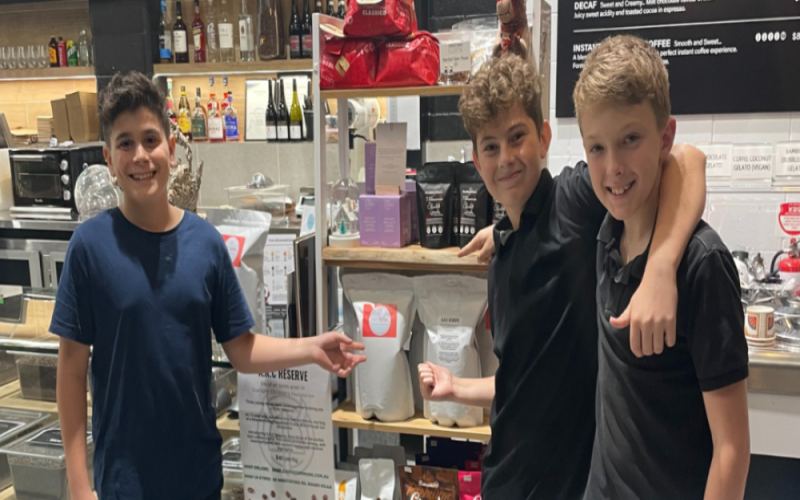
Three 12-year-old Australian teenagers founded the ARC coffee brand: an entrepreneurial journey from a school assignment to specialty espresso blends
While most 12-year-olds are still adjusting to school life, three teenagers from Australia—Arlee, Rocco, and Cristiano—have turned a school holiday assignment into a real coffee company: ARC Inc. From visiting local roasting workshops to finalizing their blend, from designing the brand identity to going door-to-door to sell their product, they personally completed the entire process of green bean selection, roasting quality control, packaging design, and sales planning. They created an espresso blend that combines flavors from Brazil, Australia, and Costa Rica, and donate 5% of the net income from each bag to a children's charity. This is not just a story about coffee, but also a practical lesson in growing up—about collaboration, gratitude, and the power of taking action. [more…]

Latte Art Beginner Tutorial: Detailed Guide to Milk Foam Requirements, Pouring Techniques, and Step-by-Step Instructions for the White Heart Pattern
Latte art is one of the techniques that many coffee enthusiasts are most eager to master after stepping into the world of espresso. Common patterns include the solid white heart, multi-layered heart, swan, tulip, and rosetta, among which the solid white heart is regarded as the most basic yet most skill-testing design. Based on the latte art teaching experience of Front Street Coffee, this article systematically explains the two major prerequisites for making a solid white heart—a qualified espresso and milk foam suitable for pouring—and breaks down in detail the key steps such as the amount of milk used for incorporation, the pouring point for forming the pattern, and the injection technique. It also introduces how espresso beans such as Front Street Classic Blend perform in latte art practice, helping beginners stably produce espresso with golden crema at home and laying a solid foundation for subsequent latte art. [more…]